The Spirit of Big Five Foundation reflects the core beliefs of Big Five in conserving and protecting the best of what our planet has to offer. This encompasses conserving and protecting wildlife, working towards poverty alleviation for some of the most vulnerable among us, providing education and healthcare for the next generation, and preserving the integrity of our global cultural heritage.
Active since: 01-01-2026 . Region/Location: Colombia

Vía Cocina – Food Train is a transformative social enterprise founded by Brian Johnston, who left a successful banking career to dedicate his life to humanitarian work. This initiative is designed to bridge the gap between agricultural potential and food security by empowering low-income neighborhoods through sustainable infrastructure and culinary education. By implementing advanced hydroponic and drip irrigation systems, the project provides fresh, nutrient-dense produce for a community kitchen while serving as a live classroom. Here, local families learn to maintain water-efficient systems in limited urban spaces, fostering long-term nutritional independence.
The initiative further supports community wellness by utilizing specialized culinary technology, such as solar dehydrators, pellet smokers, and gelato machines, to transform budget-friendly ingredients into high-quality nutrition and healthy, artisanal products. Operating as a self-sustaining social enterprise, Vía Cocina funds its training and equipment through private culinary experiences featured on Big Five itineraries. This innovative model ensures that tourism directly supports the local residents of Medellín, creating a lasting “food for life” cycle of impact.
The second quarter of 2026 brought robust growth and hands-on community support to Vía Cocina in Medellín. Utilizing specialized curing and smoking equipment, the team partnered with local families for collaborative production, highlighted by a 154-pound sausage-making initiative with participant Daniel and his family. This effort combined traditional methods with advanced European techniques to ensure food safety while providing vital financial stability during Daniel’s recovery. Concurrently, participant María Teresa received targeted mentorship in food costing, labor calculations, and commercial pricing for neighborhood food sales, building foundational skills ahead of her planned 2027 enterprise launch.
Alongside community partnerships, Vía Cocina expanded its specialized culinary output by producing over 260 packages of Asian-inspired cured meats to sustain ongoing recipe trials and local affordability. The quarter also fostered international connection through a special collaborative cooking visit from Steve Kuriga of Cadence Travel, celebrating the ongoing mission of the Spirit of Big 5 Foundation. Together, these milestones demonstrate how sustainable culinary education continues to drive economic resilience and deep social impact in Medellín.
The first quarter of 2026 has been a season of significant growth and community impact for the Vía Cocina project in Medellín. Guided by a commitment to regenerative tourism, the initiative successfully launched its “clean label” meat program by utilizing initial donations to acquire specialized dry-aging and smoking equipment. Following intensive study of traditional, preservative-free Italian curing techniques and training with international experts in BBQ and sausage making, the team is now producing high-quality spalla, lonza, coppa, and pancetta. These healthy, filler-free products are offered to the local community and clients on a sliding scale, with all proceeds reinvested into new ingredients and skills, such as upcoming workshops to help local cacao producers improve their margins through professional chocolate making.
Beyond production, Vía Cocina has become a vital hub for education and service, hosting capacity-building workshops for local women entrepreneurs and immersive permaculture sessions for traveling homeschooling groups. This spirit of service extended to an orphanage north of Medellín, where the team volunteered throughout February and March. After providing a special smoked pork meal for 70 people, the team returned to host a creative pizza-making class for the children. To overcome the facility’s lack of a working oven, the team spent a week curing fresh hams and prepping 90 handmade pita bases, ensuring the children could enjoy a nutritious, “hands-on” culinary experience. These efforts continue to demonstrate how sustainable culinary practices can foster health, independence, and deep community connection.
Active since: 08-01-2021. Region / Location: Peru
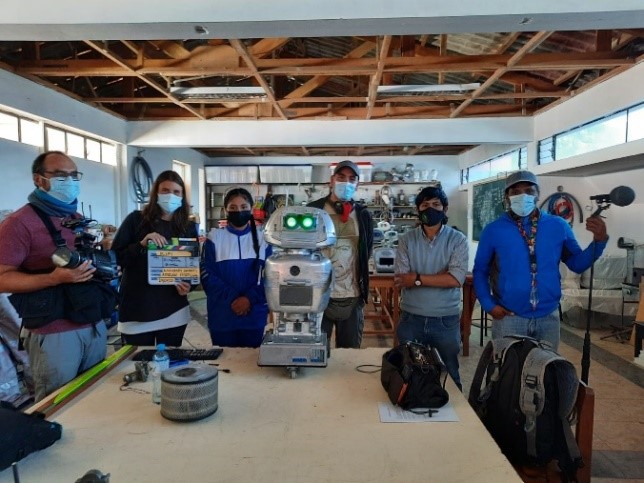 Let me introduce you to Big Five’s partnership with Walter Velasquez, an ingenious Peruvian teacher known for creating Kipi, the world’s first Quechua-speaking robot. Walter is a computer and design technician who holds undergraduate degrees in biology and chemistry, as well as a postgraduate degree in educational sciences. Primarily, though, he is a teacher with a genuine vocation for providing high-quality, inclusive education to kids in his beloved Huancavelica.
Due to the onset of the pandemic in 2020, schools in Peru were closed, and education was provided through online platforms and television. However, in impoverished regions like Huancavelica, with a lack of internet access, education is still a challenge, and virtual education is unavailable. Despite these challenging circumstances, Walter conceived the idea of building a Quechua-speaking robot using recycled materials and solar energy. This robot has been previously programmed with the school curricula so Walter could raise the attention of the kids who were curious to learn and interact with this robot in regions where kids are still not able to visit a school. Kipi is a robot that can project videos through its eyes, interact with the kids with questions and answers, and soon will be able to use artificial intelligence and teach in over 40 local dialects.
His idea was so authentic that he was recognized as “promoter of Sciences in Peru” by the National Council of Science and Technology and awarded by the Peruvian Parliament. Above all else, what encourages him to keep working hard on improving the robots and reaching more communities is the joy of the kids while they learn and interact with Kipi. Currently, Walter has received the support of a private company to build 7 additional robots so he could bring education to more kids in rural areas. However, there is still a long way to go as half of the kids he teaches do not have internet service at home and still cannot receive a proper education. Due to the area’s geography, Walter travels on foot to each remote house in the mountains of Huancavelica with Kipi carried on the back of a llama or a donkey.
Huancavelica is one of the poorest regions of the country, which has been hardest hit by domestic terrorism and is one of the main cocaine-producing regions today. Young children, devoid of access to education and basic quality of life, have left no choice except to join in this illegal trade.
Through your journey, the Spirit of Big Five Foundation is investing in and supporting Walter’s education project, which aims to improve the quality of life and provide opportunities for hundreds of children, all while offering a way to combat narcoterrorism through accessible, interactive education.
2025 Update: Smaller Robot, Bigger Reach: Kipi’s Next Chapter
The Spirit of Big Five Foundation is continuing its partnership with Walter Velasquez, an ingenious Peruvian teacher and the inventor of Kipi, to manufacture 10 “Kipi Mini” robots that will transform the teaching and learning environment in 8 selected schools in Huancavelica, Peru. The initial phase of this new project in 2025 includes the manufacturing of these robots and the development and printing of 300-500 full-color workbooks for 10 educational institutions. This marks the exciting beginning of a new project, and we will be sharing updates to mark each phase throughout the remainder of this year and next.
Active since: 06-01-2021 . Region / Location: Guatemala
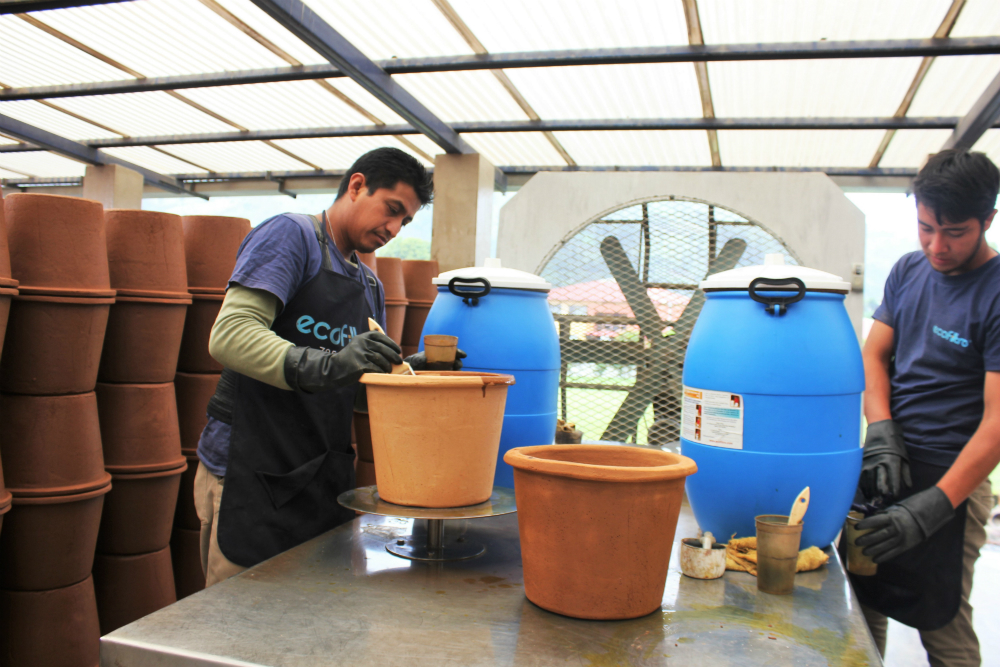
Sadly, 95% of all water in Guatemala is dangerous to drink. Guatemala’s water is the leading cause of death in many villages and one out of four rural public schools do not have potable water. This is how the Eco-filter school program was born. Its main two objectives are to distribute drinking water to community schools and involve parents in the “water for life” initiative so that children have access to purified water in both their schools and at home. Parents can purchase their water filter with access to different forms of payment plans that Eco-filter offers.
Eco-filters are handcrafted by local artisans and composed of a ceramic filtering unit (made of clay, sawdust, and colloidal silver) that hangs inside a container equipped with a top and a spigot for the filtered water. In the filtering unit, the fired clay produces microscopic pores that trap turbidity and bacteria. Each filter lasts about two years, and afterward, the filter can be used to enrich the soil and grow food.
So how does the program work? First, Eco-Filter assigns a community representative to identify the school that is most organized, motivated, and has high parent involvement. Once the school has been identified, the delivery of water filters is scheduled. On the day of the delivery, the Eco-Filter representative explains the importance of clean drinking water, the benefits of the water filter, and the payment plan options. The school principal is responsible for inviting all parents to the event to ensure control of the donations. If parents subscribe to the “Water for life” initiative, they receive their filter.
A donation of US$35 covers the cost of one filter for one classroom, including delivery and training. This eco-filter will provide 25 children with purified water for two years in a public school in the rural communities of Guatemala.
The Spirit of Big Five is committed to transparency and impact and the mission to bring safe drinking water to Guatemalan schools is making huge strides. The work is ongoing but we are proud to announce the progress made to date: 24 schools now have 108 operational water filters, ensuring that 2,878 children have a foundation for better health and education.
Through your contribution, together, we can all make a difference to bring a glimpse of hope and opportunity for a better quality of life to those less fortunate.